

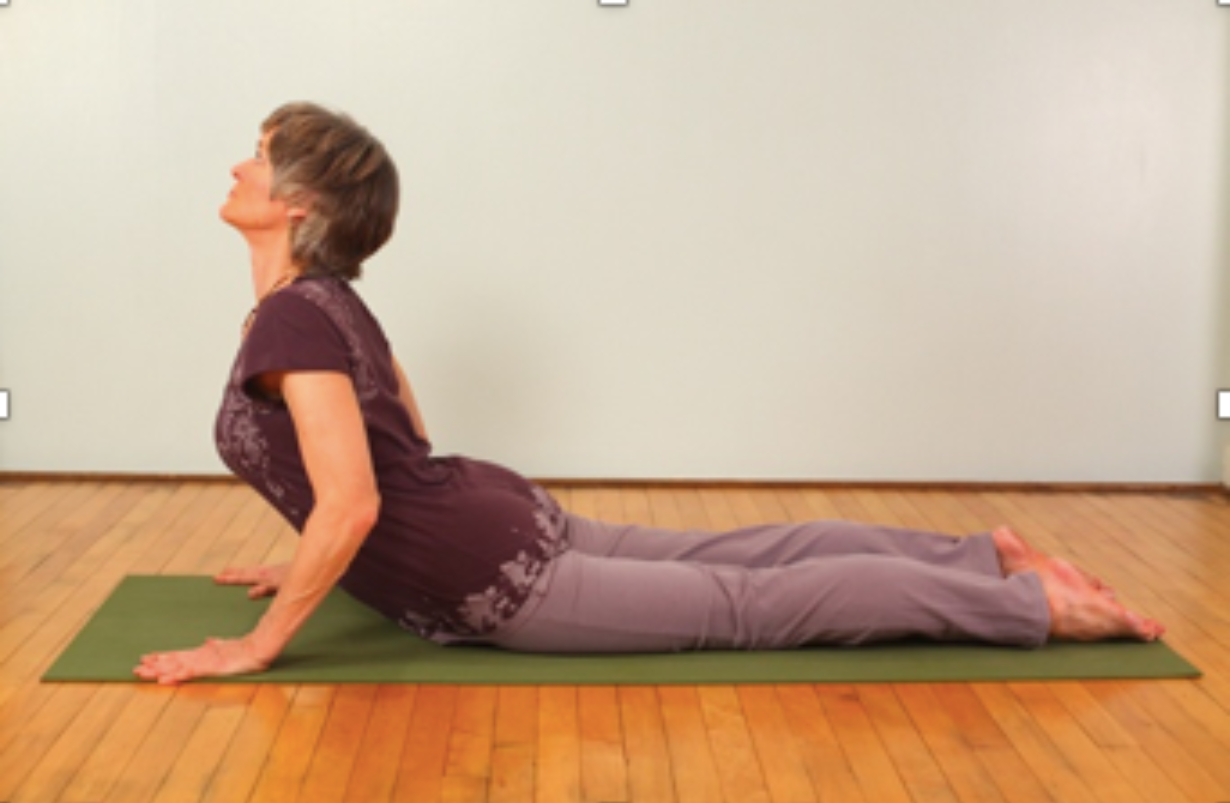
Bhujangasana
Description
Pronunciation: boo-jawng-GAWS-ahna
Translation: In Sanskrit, bhujanga means snake or serpent thus the Cobra Pose. Asana translates to pose or posture and also seat.
Do you want to stay forever young? Flexibility of the spine conveys longevity and radiance of health. Cobra Pose gets you started with flexing the spine to warm up for deeper backbends. Imagine yourself having the suppleness of a snake as you undulate up and down in this yoga posture.
If you sit at a desk, this is great to do as an antidote to hunching forward. Start doing this pose if your heart needs opening to feel more love, and if you are slightly depressed and need invigoration. The heart chakra is affected and opened. Those who have posture in which their shoulders go forward can do heart opening backbends such as this simple one, to change their energy to more positive and invigorated.
Backbends call for opening the back gradually, so gentle repetition of this pose, within vinyasa practice or alone, opens up the spine. Start with “baby cobra” by lifting a little bit off the floor with the sternum lifted. As your body wa
rms up, you can straighten the arms and bring your torso higher.
An important thing to remember in this and other backbends is to tilt the pelvis so the tailbone is coming toward the front of the body and the floor. This protects the spine by keeping the lower back long with space between vertebrae. You’ll get added flexibility and great benefit from the pose if your back is slightly stiff.
Technique: Let’s get started!
Lie with your belly and the front of the body on the mat. Extend your legs and keep the feet together. The toes should point straight back. Position your hands on the mat close to your pelvis with your fingers pointing toward your head and your middle fingers parallel with your spine. Press into the floor with your hands including your palms and fingers. Inhale and press down with your hands. Curl your spine as you lift your upper torso from the mat. Keep yo
ur knees tight throughout. Lift up from the floor until your pubis is in contact with the mat. Throughout the posture, protect your lower lumbar back by rolling the coccyx down. Straighten the arms as much as possible while keeping a firm contact between your pubis and your mat. Keep your shoulders relaxed down from the ears as you bring your sternum forward between them.
Press your legs, your feet and pubic bone into the earth as you lift your torso and arch. Arms assist you, and then you can return to the floor. Next time go a little higher, using more arm strength, but still creating the arch in your body by lifting your sternum. Relax your buttocks as you do the posture, remembering to breathe. Gently let yourself down to the mat, and try again. Shoulders follow, but don’t push the shoulder blades together. Drop shoulders down your back. Really put focus into the spine, in a beautiful arch. Make space between each verte
bra. Open your body around the arched spine so muscles are in support of this opening.
Hold the posture and come out gently, lying prostrate on the floor. Repeat, going a little higher each time. You can also do the posture as part of a vinyasa sequence. Often yogis do Plank Pose or alternatively Chaturanga Dandasanana transitioning to Cobra Pose. Then lie prostrate on the mat and go into Downward facing dog, and other poses you do in your vinyasa practice such as the sequence of The Sun Salutation. You will come around to it again and again, and the arch will go deeper with your arms straighter and torso higher as you progress through a practice.
Beginner’s Tip: To warm up your spine to be ready for this backbend, you can do some restorative yoga. Use a blanket roll or a rolled mat under your back. To do this, lie on the mat face up but put the roll perpendicular to your body at the level
of the bottom of your shoulder blades. Hang you over the mat or blanket roll for a few minutes, relaxing and breathing. Lift that sternum and use gravity to open the heart area. It is great as passive, restorative yoga. It helps those with back issues and those who hunch in their posture. Then turn over on the mat and practice the cobra, first just barely lifting your sternum off the mat without even using your arms. Return to the mat and rest. Then do it again going higher and assisting with the arms a bit. Put more lift into it the more flexible your spine becomes. It will become flexible with repeated backbends done in a mindful and aware fashion, especially if done every day.
Noticing the Subtle: Sometimes when I am in the most full version of this pose when going through vinyasa
flow, I notice a feeling of fear comes up to go completely into it. It is a place in my lower back or sacrum that holds a stuckness
pattern. It can seem scary to bring the pelvis fully forward. Lately when I focus on opening the front of my body, especially near the sternum, it helps me release deeper and safer into the pose, and to deal with the sense of fear for the well-being of my lower back that arises. Also, be sure the lengthen the lower back and bring the
pubis forward and toward the floor as you go deeper into the posture.