

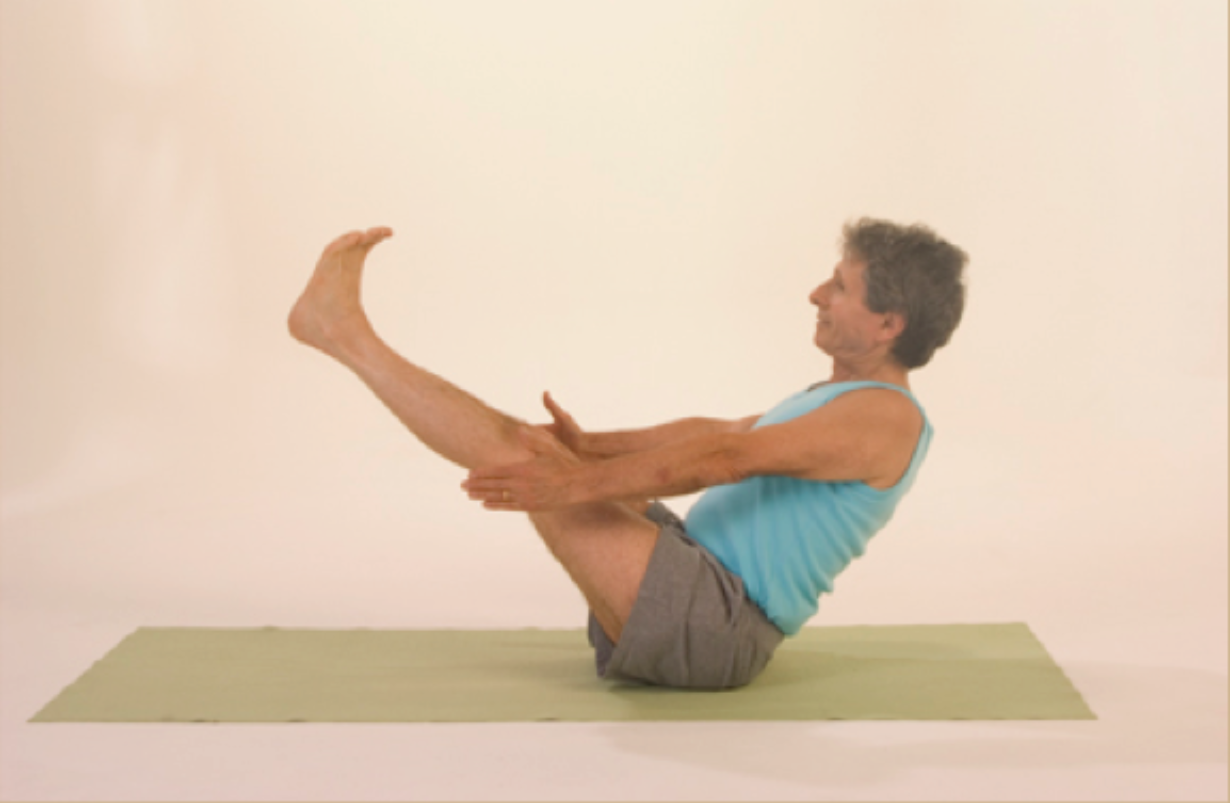
Paripurna Navasana
Description
Pronunciation: par-ee-POOR-nuh nuh-VAHS-ahna
Translation: In Sanskrit, Paripurna means full or complete. Nava refers to boat. Nava is also the Sanscrit root of the English word “navy”. Asana, of course, means pose. Paripurna Navasana is the “full boat pose”. The posture resembles a boat with oars, thus it is named.
Paripurna Navasana looks easy but is challenging. It de
velops core abdominal strength, of use to everyone who wants to have a good posture and prevent back pain. Athletes benefit from the abdominal and deep hip flexor strengthening. Also called “Boat Balance”, the pose requires balance on the sit-bones of the lower buttocks.
Technique: Sit on the floor with your legs stretched out in front of you as in Dandasana (Staff or Rod Pose). Keep your torso perpendicular to the floor and your spine extended. Place your arms at your sides with the palms or fingertips on the floor next to your hips. If the palms are on the floor, your fingers should point towards your feet.
The next stage of the pose will be to keep the legs straight and to lean back raising them off the floor. This movement is often associated with a tensing of the superficial abdominal muscles. However, the actual lifting of the legs should be accomplished using your psoas major muscles wh
ich connect your lower spine with your legs and not these abdominal muscles. As you work in this pose focus on relaxing the superficial abdominal muscles and lifting the legs with these deep psoas major muscles.
Keep the legs extended without bending the knees and lean back your torso as your raise the legs off the floor. Your only points of contact with the floor should be your sit-bones (Ischial tuberosities) and your palms or fingers. Avoid the tendency to slouch back onto your sacrum.
Use your finger tips or palms pressed against the floor to find the balance. Keep the legs straight and actively extended. Keep the torso straight. Avoid the tendency to round the spine. Do not clench the abdominal muscles.
Balance only on the sit-bones. Do not slump. Keep the spine from touching the floor. Raise the straight extended legs so that the feet become higher than the head. Your legs and torso should form an angle of 60-6
5 degrees. Throughout the pose keep the legs straight without bending your knees. When you have your balance, take your arms and stretch them in front with the palms facing each other. The arms should be parallel with the floor with your hands extended beyond the legs.
Widen the shoulder blades and relax your shoulders down from your ears as you lift the sternum. Keep the extension in your spine. Think “length” of the torso, and “strength” in the deep psoas major muscles. Stay in the position for a minute or more with deep relaxed breathing. Exhale and place your hands on the floor. Bring the legs down, and then bring down rest of your torso to the ground.
Beginner’s tip: Use a long yoga belt over your feet as you do the pose. Put the belt over your feet and hold it in your hands. Alternatively you can loop the belt over the feet and behind the back at the level
of the back pelvic rim to free the hands in the pose. Try to get the “V” formation of your body. Eventually discard the belt and use your psoas major muscles along with your extended torso and legs to hold you up.